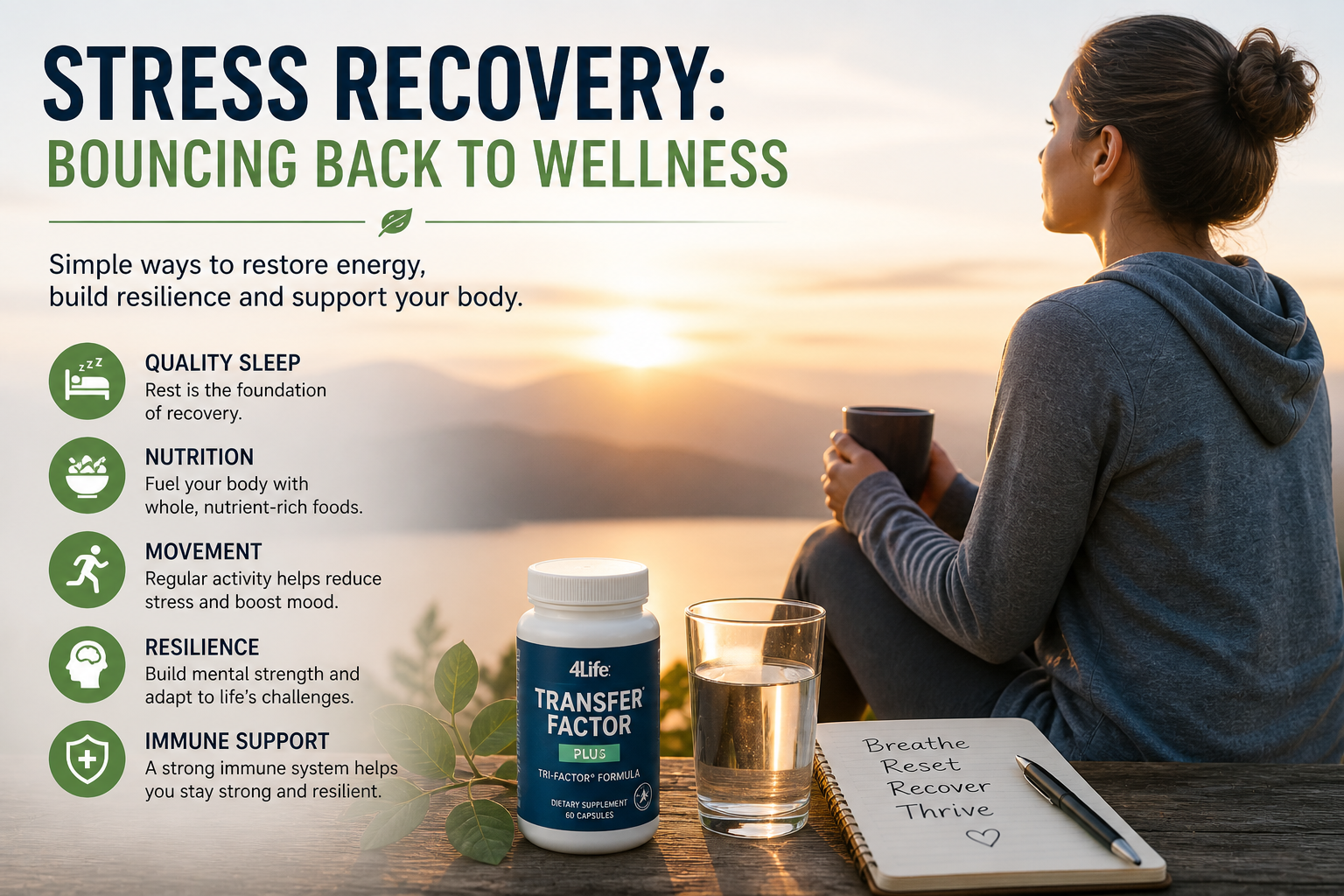
You sleep, you rest, you try to ease off — and you're still exhausted. That experience is real. Many people assume stress matters only while things feel urgent: deadlines, tense stretches at home, money worries. What often surprises them is afterward: pressure eases, the calendar opens a little, and the body still feels heavy, thinking stays dull, motivation stays low. That pattern is common — and it usually reflects physiology more than “weak will.”
Stress is not only mental strain. The whole body shifts toward survival mode — sleep, appetite, immunity, and metabolism adjust. That response helps in short bursts; stretched across weeks or months it becomes costly. Hormones stay elevated; sleep fragments; convenience meals add up; reserves empty faster than they refill — so fatigue can linger long after the hardest moments have passed.
You rarely need an extreme makeover. Mostly you need steady habits repeated long enough that your nervous system can register calm as credible again. Below is what is happening, why tiredness hangs on, and practical steps that fit ordinary weeks.
Why Stress Drains Your Energy
When stress rises, the body shifts into high alert: faster breathing, higher heart rate, more stress hormones. That state can help in the short term; sustained over time it is demanding. Nutrients are used quickly, sleep suffers, and meals often drift toward whatever is fastest — sometimes late-night scrolling rounds out the picture.
If this repeats week after week, recovery is no longer immediate. Common signs include:
- You wake up already tired.
- You rely on caffeine but still crash in the afternoon.
- You feel wired at night but cannot rest deeply.
- Your patience is lower and your mood changes faster.
- Small tasks feel bigger than they should.
None of this means you're “weak.” Usually the body has been running a deficit while recovery habits have not yet matched the load — an ordinary pattern after prolonged strain.
Signs Your Body Is Not Recovering from Stress
You often notice it in the weekday rhythm: low morning energy, afternoon slumps, nights that log hours without deep rest, colds that linger, exercise that leaves you sore longer than it used to. Fatigue stacks with slower immune and repair work — pushing through without adjusting daily habits often misses what actually needs care.
After enough time “running hot,” immunity and tissue repair rarely reach full speed. Even when life quiets down, tiredness can remain until that backlog clears.
The Hidden Cycle: Chronic Stress, Sleep Loss, and Low Energy
One of the clearest reasons fatigue persists is poor sleep — in quantity, quality, or both. Time in bed may look adequate on paper, yet sleep stays light or interrupted: racing thoughts, screens at night, adrenaline still elevated — then morning arrives on caffeine. The cycle feeds itself.
Fragmented sleep narrows the window for recovery: foggy mornings, more reliance on stimulants, later evenings, later bedtimes — and exhaustion can remain even after outward stress has eased.
Simple point: lasting recovery from chronic stress depends on genuinely better sleep — not occasional treats marketed as self-care. Sleep is where much of the repair work happens.
Why “Just Rest More” Is Not Enough
Why rest alone may not fix it:
- the stress response can stay partly active.
- cortisol rhythm (morning and evening) may be irregular.
- repair processes may still be catching up.
A quiet day under blankets can help emotionally, but it does not by itself reset hormones, refill nutrient gaps, or steady blood sugar. Recovery tends to come from steadier sleep timing, regular hydration, recognizable meals, gentle movement, and less late-night stimulation on screens. Think of energy as a balance sheet: one slow day rarely offsets months of strain; small steady inputs across the week matter more.
How to Recover from Stress (Step-by-Step)
Most people do better with modest steady changes than with a dramatic “new start Monday.” What tends to work is repetition: protect sleep first, eat on a rhythm that avoids long gaps, reduce unnecessary daily friction (notifications, overloaded calendars), move a little every day, and consider immune-focused supplements only when habits and food still leave clear gaps.
The same outline applies whether you are in the middle of burnout or simply feel low while life looks calm on the surface.
Four pillars to repeat:
- steady nights
- regular meals
- less background stress
- immune support when appropriate
This week in plain terms:
- Sleep: keep a predictable bedtime window; calm evenings; wake within a similar range most days.
- Food: build meals around protein, fiber, healthy fats, and water — fewer sharp highs and crashes.
- Daily load: trim non-essential alerts; simplify commitments where you can; limit stressful scrolling late.
- Immune support: habits first; add supplements only when sleep and nutrition are already addressed.
1) Stabilize your mornings
The first hour often sets the tone. Aim for similar wake times most days (including weekends when possible), open curtains early, and drink water before leaning on caffeine. A few minutes of outdoor light — even stepping outside briefly — supports your body clock more than immediate screen time.
If you can, delay stressful messages or news for the first twenty minutes and let your nervous system ease in.
2) Eat for steady energy, not spikes
Stressful weeks often push people toward skipped meals and quick sugar — which can feel like anxiety or brain fog when blood sugar swings. Aim for simple repeating meals built around protein, fiber, and healthy fats; perfection is not required.
- Breakfast: eggs, Greek yogurt, or protein smoothie with fruit.
- Lunch: lean protein + vegetables + whole-grain carb.
- Dinner: protein + colorful vegetables + healthy fat.
- Snacks: nuts, fruit, cottage cheese, or hummus with carrots.
3) Use caffeine with a strategy
Coffee is not the problem by itself — timing and amount are. Late or heavy use can disrupt sleep. Hydrate and eat something solid before additional cups; choose an afternoon cutoff you can keep. Many people notice sleep improving within several nights after that alone.
4) Move your body daily, even lightly
When energy is low, ambitious workouts may feel out of reach — that is understandable. A twenty-minute walk, easy cycling, stretching, or a short bodyweight session still supports circulation, mood, and stress chemistry.
A modest steady dose usually beats intense bursts that cannot be sustained.
5) Protect your evening wind-down
Most recovery happens overnight, so evenings carry weight. Where possible, reduce bright screens in the last hour before bed, dim lights, and keep the bedroom cool and dark. A simple sequence — wash up, light reading, slow breathing — helps the nervous system shift down.
6) Reduce background stress, not only big stress
Major crises draw attention, but small daily frictions also drain energy: constant notifications, clutter, multitasking, tasks left half-done. Addressing one or two sources of friction often helps more than aiming at ten at once. Examples:
- Turn off non-essential phone alerts.
- Batch email checks to fixed times.
- Create a short daily plan with top 3 priorities.
- Spend 10 minutes each evening resetting your space.
7) Support your body with quality nutrition and supplements
Food remains the foundation — stressful periods simply make eating uneven: skipped meals, digestive discomfort under pressure, reliance on quick options. Supplements can help fill gaps alongside habits, not instead of regular meals. Choose reputable brands, clear labels, and a small number of products you will use consistently.
Extended stress often draws more heavily on B vitamins and magnesium, which support normal stress chemistry and energy production; magnesium also contributes to nerve and muscle relaxation; vitamin C plays a role in how cells handle oxidative stress from strain. Together they matter most when meals swing between thoughtful cooking and whatever was easiest that day.
Some people add adaptogens such as ashwagandha as part of a broader plan. Herbs do not replace therapy, consistent sleep, balanced meals, or exercise; alongside those basics they may soften edges for some individuals.
After long periods of high alert, thin sleep, low mornings, and frequent minor illness often travel together — habits still come first (sleep, meals, movement, calmer inputs), with targeted supplements as support. Many combine those foundations with specific formulas — for example Reflexion for mood and everyday stress balance alongside broader immune support with 4Life Transfer Factor Plus Tri-Factor. Supplements widen margin around lifestyle choices; they seldom replace them.
How Long Does Recovery Take?
Many people notice modest improvements within one to two weeks when they apply these basics consistently. Deeper recovery usually takes longer — especially after months under heavy load — but phases often look roughly like this:
- Week 1-2: Better clarity, fewer crashes, calmer evenings.
- Week 3-6: More stable mood, stronger focus, better stamina.
- Week 6+: Improved resilience and easier stress recovery.
Speed matters less than steady direction and repetition.
Signs Your Resilience Is Coming Back
Progress is easy to overlook if you only ask whether you feel completely recovered. Smaller signals matter:
- You recover faster after a stressful day.
- You sleep deeper and wake clearer.
- You need less caffeine to function.
- You make better food choices without forcing it.
- Your patience and emotional balance improve.
These are meaningful signs that your system is rebuilding.
Common Mistakes That Slow Recovery
Even motivated people can get stuck if they make recovery too hard. Watch out for these patterns:
- Doing too much at once: Ten new habits at once usually fail. Start with three.
- Overtraining while exhausted: More is not always better when your recovery is low.
- Ignoring hydration: Mild dehydration can feel like fatigue and poor focus.
- Late-night stimulation: Heavy media, work, or caffeine late in the day delays repair.
- Expecting overnight results: Recovery is a process, not a quick hack.
A Simple Daily Stress Recovery Template
If you want a ready-to-use plan, try this for the next 14 days:
- Wake at the same time each day.
- Drink water and get morning daylight.
- Eat three balanced meals with protein.
- Walk at least 20 minutes.
- Limit caffeine after early afternoon.
- Spend 10 minutes on breathing, journaling, or quiet reflection.
- Keep a fixed bedtime window.
This plan is basic on purpose. It works because it is easy to repeat, even on busy days.
When to Get Professional Help
If fatigue remains severe for weeks together with persistent low mood, unstable sleep, unexplained weight change, unexplained pain, or symptoms that worsen despite sensible lifestyle steps, speak with a clinician. Articles outline patterns; conditions such as thyroid disorders, anemia, infection, medication effects, depression, or others require examination and individualized care.
Final Thoughts
Deep exhaustion after prolonged pressure is common among capable, conscientious people. It usually eases when background stress truly decreases, sleep stabilizes, meals become steadier, and expectations shift away from a single weekend “reset” fixing months of strain.
Give modest habits roughly two consistent weeks before deciding nothing helps. Early signs are often subtle — clearer mornings before a dramatic sense of being “cured.” Noticing those signs still matters; they show that direction is improving.
Recovery is not only more rest; it is gradually reminding your nervous system and daily rhythms that sustained danger has passed.
This article is for informational purposes only and does not replace professional medical advice.